BfN-FPV
Impacts of Floating PV Systems on Species, Habitats, and Landscape Aesthetics (and Approaches to Mitigation) – Subproject 2: Investigation of Nature Conservation Impacts of Floating PV Systems on Standing Waters
Duration: 01.08.2024-31.07.2028
The overall project encompasses diverse investigations and measurements of chemical, physical, and biological parameters and components. Our work program focuses on “Epiphytic growth on floating bodies and their impacts on the sediment”.
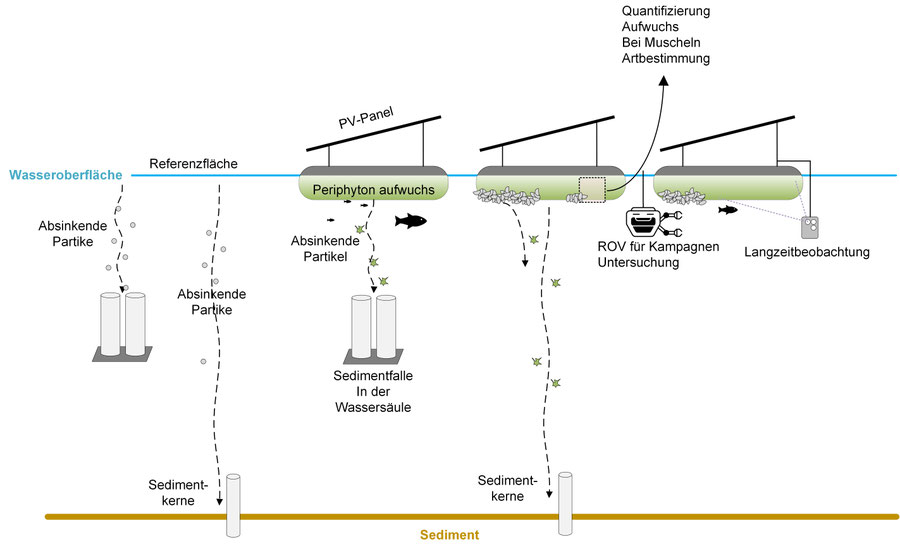
To investigate the influence and impacts of periphyton/biofilms and potential mussel epigrowth on the floating bodies of FPV systems, the epigrowth itself—as well as the “abrasion” or particles released and sinking to the bottom—should be captured. Currently, there is no standardized procedure for such investigations.
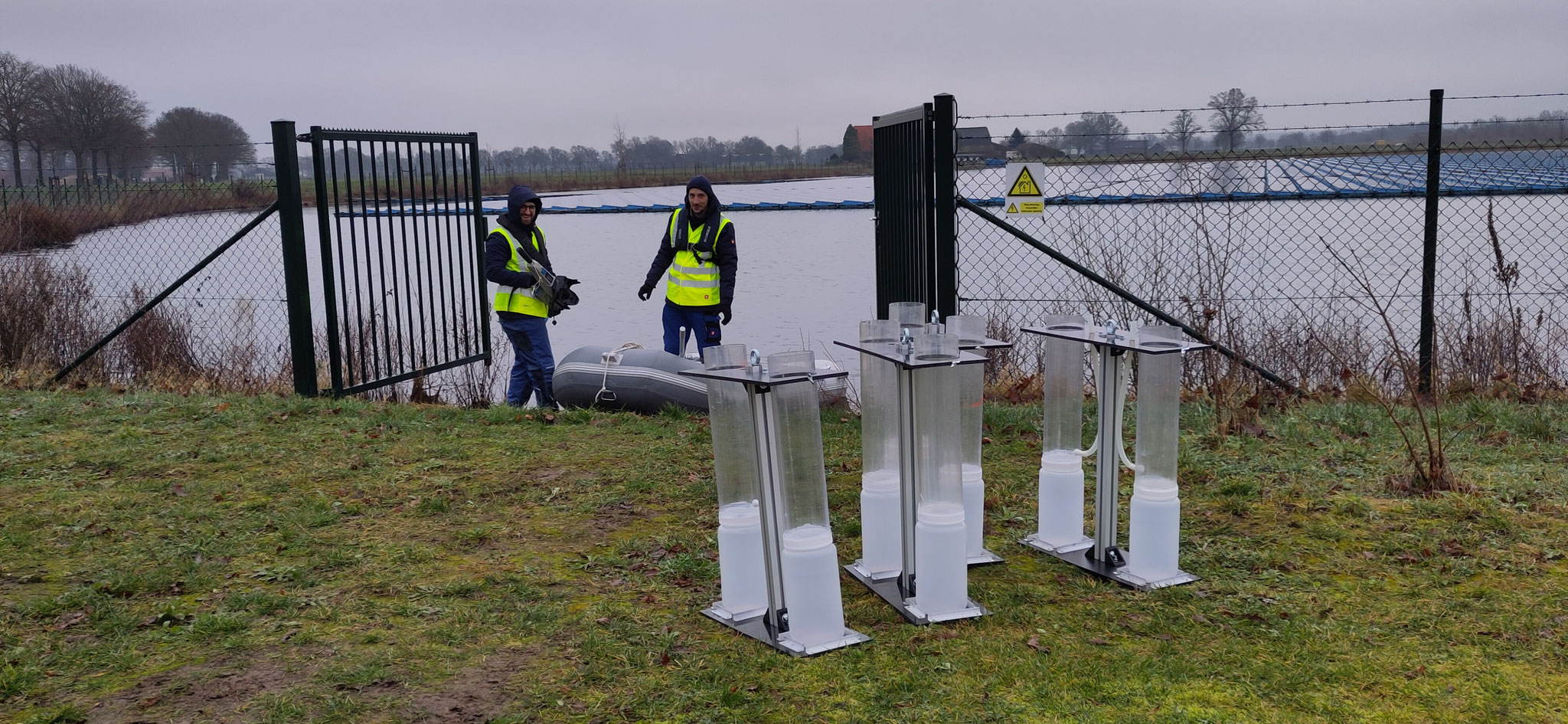
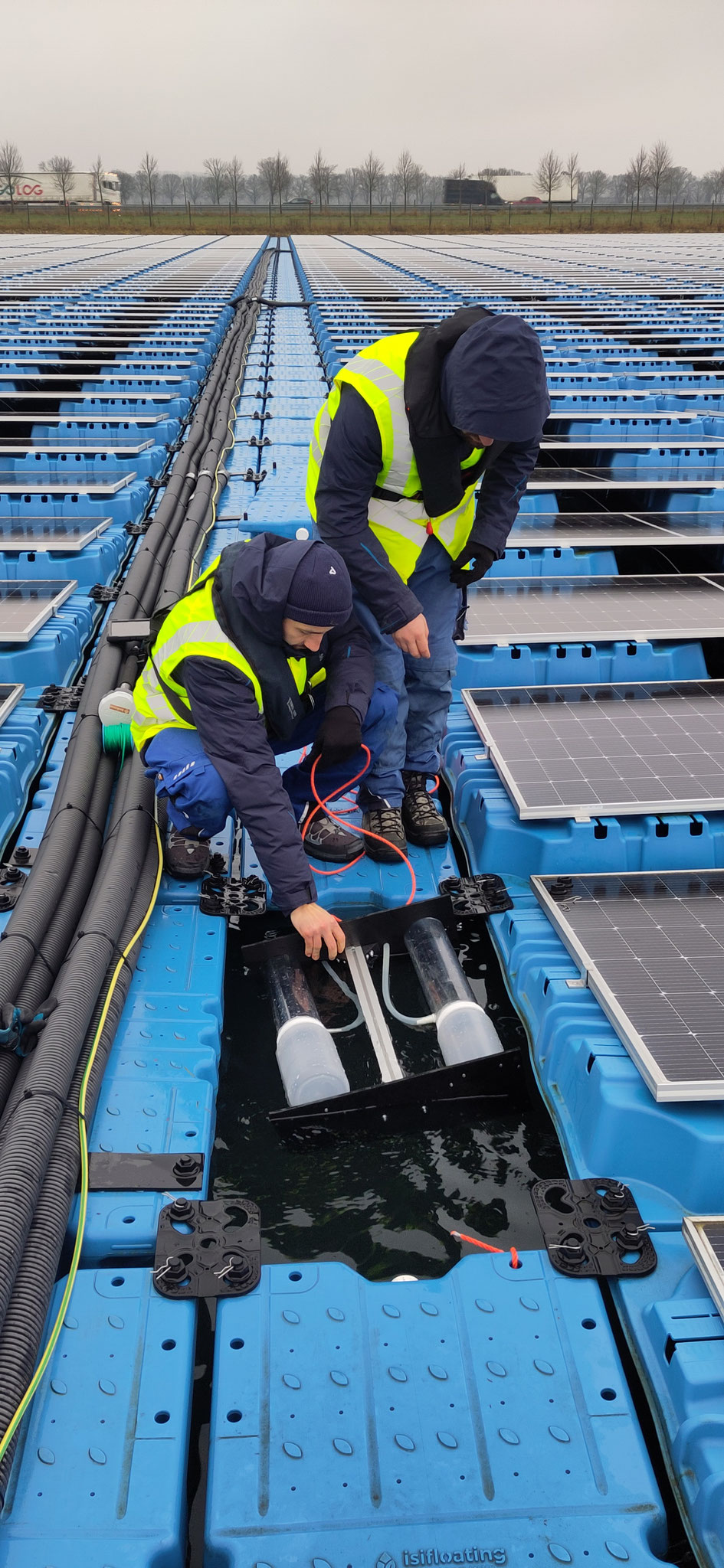
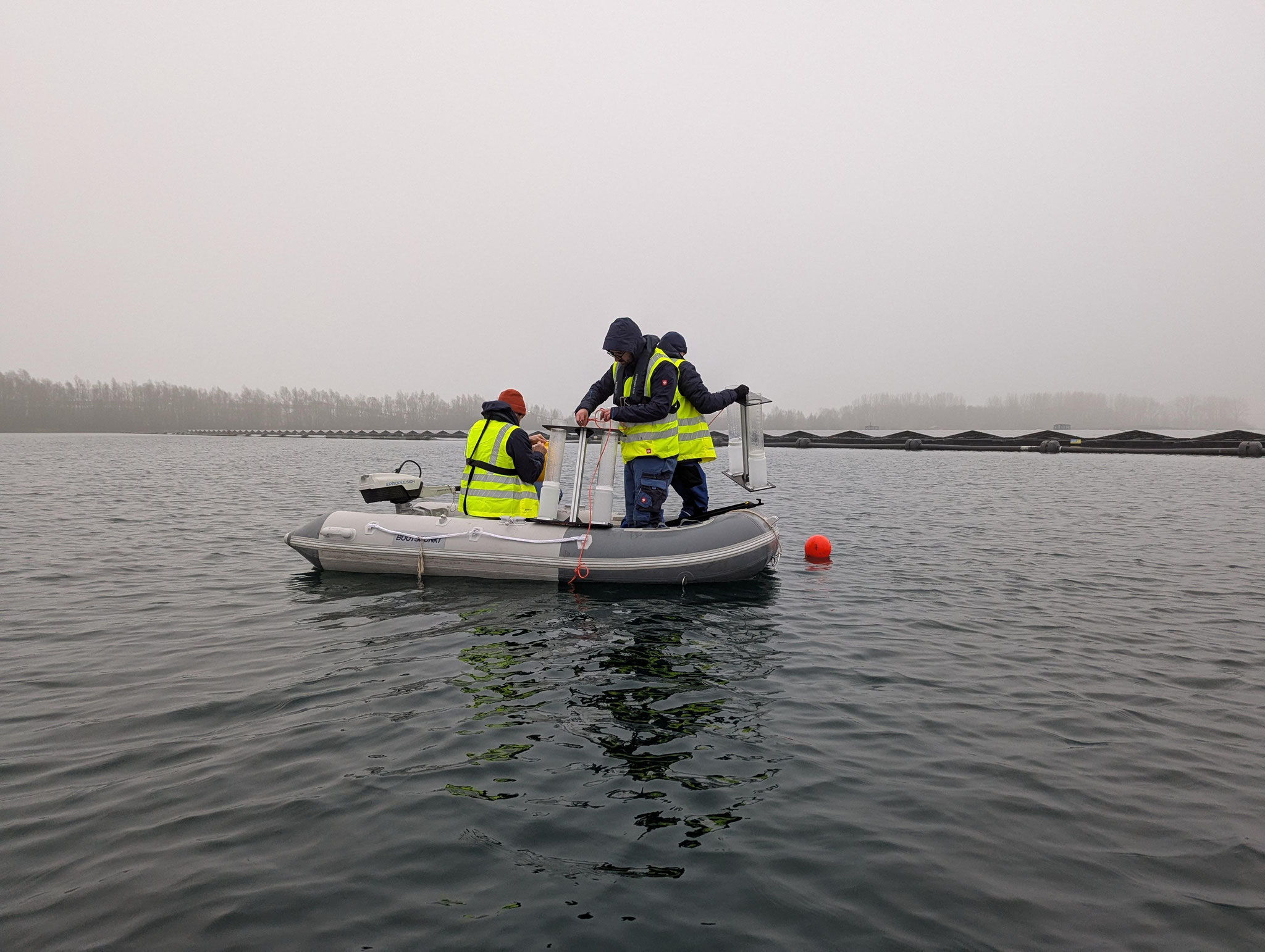
To accommodate the varying technical conditions of different FPV systems and their structural properties, a system has been developed to enable representative measurement of epigrowth on solid bodies under FPV installations. In addition to the option of removing floating bodies from the installation for sampling, 24 HDPE canisters per lake will be additionally installed in the water beneath the PV panels. During the project period, two canisters can be removed and sampled quarterly. This also enhances comparability between results.
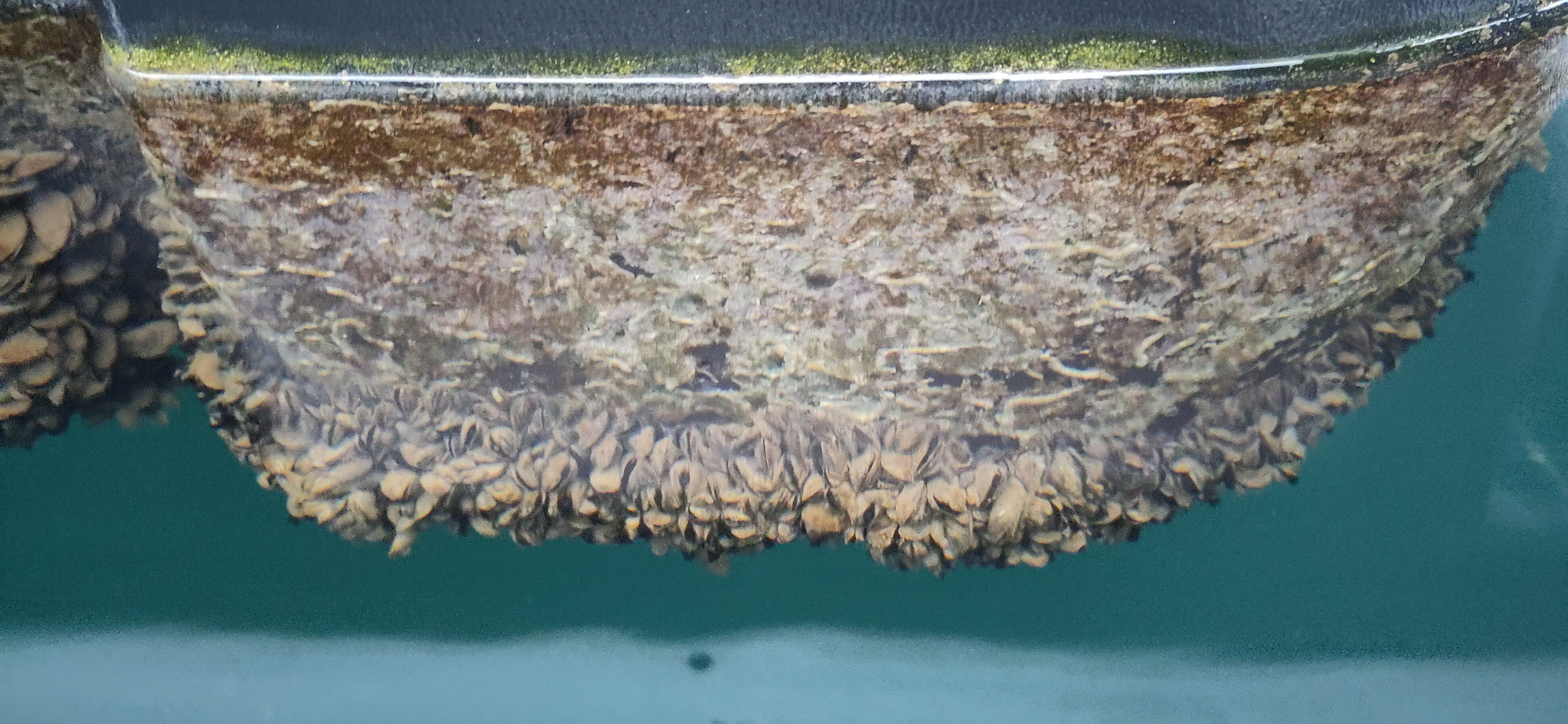
Epigrowth will also be visually documented over the course of the project (using a diving robot or underwater camera) to capture temporal changes. Furthermore, representative floating bodies will be extracted from the FPV installation, and the growth detached. This allows investigation of the climax biofilm situation at the current age of the installations in Reuver and Druten.
Subsequently, the dry mass of the samples will be determined on an area-proportional basis, and the phosphorus content on a weight basis. In the case of mussel growth, the mussels will be detached and collected, their species composition determined, and sorted by size classes. Through photodocumentation of selected floating bodies, e.g., based on literature data (species-specific filtration performance), the filtration performance of the mussel epigrowth across the entire FPV installation can be estimated.
From the phosphorus and carbon contents, the total phosphorus and carbon mass in the epigrowth of the FPV installation can be estimated.